
By: Karina Helle
|
Report No.
|
1150 |
|
Discipline/Origin
|
HSEQ |
|
Well
|
Kallåsen |
|
Date created
|
2018/03/21 |
|
Project Phase
|
Project Phase |
|
LL Type/Classification
|
PSA Q&A |
Transocean Arctic
N/A PSA Q&A LL with Wellesley
Kallåsen (35/12-6 S) – N/A
PSA: Q
Risiko for shallow water flow og mitigerende tiltak.
PSA: A
Ref AfC chapter 3.6.2, shallow water flow is considered a regional risk in the Kallåsen area. From
offset experience, the Utsira sands may result in shallow water flow if drilled with seawater as the
drilling fluid.
With this risk in mind Wellesley requested Gardline to address the shallow water flow risk when
assessing the site survey data over all well locations. From an assessment of the seismic data
Gardline concluded the risk of shallow water flow is higher when remobilized sands are drilled into.
For this reason, Gardline recommended to move the top-hole location of the Kallåsen well away
from the disturbed zone (with remobilized sands) which Wellesley have done (hence the S shaped
well) ref. attached document ‘Gardline SWF Kallåsen Location Study’.
None the less Wellesley are of the view the risk of shallow water flow cannot be negated by moving
the top-hole location alone and therefore consider it prudent to drill this section with a weighted
mud. After evaluating the options Wellesley have concluded the best option is to drill the section
using a riserless mud recovery system from IKM (MMR system) that allows both a weighted mud to
be employed and enables proper isolation of any potential shallow water flow sands behind
cemented casing.
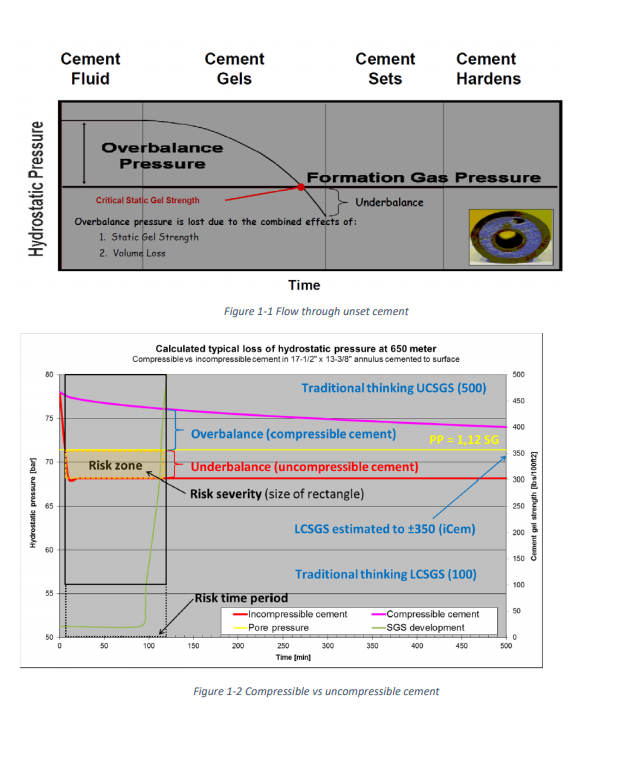
Utilizing a foamed cement slurry is critical when cementing the casing to prevent the cement from
losing its fluid weight properties as it sets. Traditional cements, as they gels up and pressure/volume
losses occur, lose their ability to act as a fluid and therefore can result in loss hydrostatic pressure
which could provoke any shallow water interval to flow. See Figure 1-1 below.
The recommended practice from Halliburton is to cement with a foamed Deep Water Flow Stop
(DWFS) cement that is specifically designed to address this problem. Figure 1-2 is a demo version to
show importance of cement compressibility on the overbalance short term after placement. Key is
to maintain overbalance until gel is into safe zone.
Foamed DWFS has an aggressive strength development and high compressibility (foam essential for
high compressibility) that maintains its hydrostatic pressure longer into gel development period
ensuring the hydrostatic pressure against any shallow water flow interval is maintained until the
cement has begun to bond. This ensures the cement does not get contaminated and avoids
channeling. The foaming of the cement is essential to this process in combination with the gelling
properties of the DWFS mix.
References is also made to ‘Kallåsen Risk Register – Shallow Water Flow’ which summarises the risk
assessments done.
Transocean Arctic
Question
Risiko for shallow water flow og mitigerende tiltak.
Answer
Ref AfC chapter 3.6.2, shallow water flow is considered a regional risk in the Kallåsen area. From
offset experience, the Utsira sands may result in shallow water flow if drilled with seawater as the
drilling fluid.
With this risk in mind Wellesley requested Gardline to address the shallow water flow risk when
assessing the site survey data over all well locations. From an assessment of the seismic data
Gardline concluded the risk of shallow water flow is higher when remobilized sands are drilled into.
For this reason, Gardline recommended to move the top-hole location of the Kallåsen well away
from the disturbed zone (with remobilized sands) which Wellesley have done (hence the S shaped
well) ref. attached document ‘Gardline SWF Kallåsen Location Study’.
None the less Wellesley are of the view the risk of shallow water flow cannot be negated by moving
the top-hole location alone and therefore consider it prudent to drill this section with a weighted
mud. After evaluating the options Wellesley have concluded the best option is to drill the section
using a riserless mud recovery system from IKM (MMR system) that allows both a weighted mud to
be employed and enables proper isolation of any potential shallow water flow sands behind
cemented casing.
Utilizing a foamed cement slurry is critical when cementing the casing to prevent the cement from
losing its fluid weight properties as it sets. Traditional cements, as they gels up and pressure/volume
losses occur, lose their ability to act as a fluid and therefore can result in loss hydrostatic pressure
which could provoke any shallow water interval to flow. See Figure 1-1 below.
The recommended practice from Halliburton is to cement with a foamed Deep Water Flow Stop
(DWFS) cement that is specifically designed to address this problem. Figure 1-2 is a demo version to
show importance of cement compressibility on the overbalance short term after placement. Key is
to maintain overbalance until gel is into safe zone.
Foamed DWFS has an aggressive strength development and high compressibility (foam essential for
high compressibility) that maintains its hydrostatic pressure longer into gel development period
ensuring the hydrostatic pressure against any shallow water flow interval is maintained until the
cement has begun to bond. This ensures the cement does not get contaminated and avoids
channeling. The foaming of the cement is essential to this process in combination with the gelling
properties of the DWFS mix.
References is also made to ‘Kallåsen Risk Register – Shallow Water Flow’ which summarises the risk
assessments done.
EDITOR
CLOSE LL (testing)
New Lesson Learned
-
- PROJECT PHASE
- Operational
- Planning
- Reporting
- CLASSIFICATION
- Positive
- Negative
- Origin
- Own Experience
- Experience Transfer Meeting
- NEA Q&A
- PSA Q&A
- PSA Findings
- DMF
- Norog
-

- RIG
 Borgland Dolphin
- Island Innovator
- Well
 Oselvar
- Gomez
- PROJECT PHASE
- Operational
- Planning
- Reporting
- CLASSIFICATION
- Positive
- Negative
- Origin
- Own Experience
- Experience Transfer Meeting
- NEA Q&A
- PSA Q&A
- PSA Findings
- DMF
- Norog
-

- RIG
- Island Innovator
- Well
- Gråspett
- PROJECT PHASE
- Operational
- Planning
- Reporting
- CLASSIFICATION
- Positive
- Negative
- Origin
- Own Experience
- Experience Transfer Meeting
- NEA Q&A
- PSA Q&A
- PSA Findings
- DMF
- Norog
-

- RIG
- Deepsea Bergen
- WELL
- Brasse
- Rungne
- PROJECT PHASE
- Operational
- Planning
- Reporting
- CLASSIFICATION
- Positive
- Negative
- Origin
- Own Experience
- Experience Transfer Meeting
- NEA Q&A
- PSA Q&A
- PSA Findings
- DMF
- Norog
-

NO LLs for INEOS- RIG
- Borgland Dolphin
- WELL
- Fat Canyon
- PROJECT PHASE
- Operational
- Planning
- Reporting
- CLASSIFICATION
- Positive
- Negative
- Origin
- Own Experience
- Experience Transfer Meeting
- NEA Q&A
- PSA Q&A
- PSA Findings
- DMF
- Norog
-

- RIG
- Deepsea Yantai
- Well
- Shrek
- PROJECT PHASE
- Operational
- Planning
- Reporting
- CLASSIFICATION
- Positive
- Negative
- Origin
- Own Experience
- Experience Transfer Meeting
- NEA Q&A
- PSA Q&A
- PSA Findings
- DMF
- Norog
-

- PROJECT PHASE
- Operational
- Planning
- Reporting
- CLASSIFICATION
- Positive
- Negative
- Origin
- Own Experience
- Experience Transfer Meeting
- NEA Q&A
- PSA Q&A
- PSA Findings
- DMF
- Norog
-
\n\t\t
- \n\t\t\t\t
- All<\/a><\/li>\n\t\t\t\t
- DNO<\/a><\/li>\n\t\t\t\t
- DEA<\/a><\/li>\n\t\t\t\t
- Faroe<\/a><\/li>\n\t\t\t\t
- INEOS<\/a><\/li>\n\t\t\t\t
- PGNiG<\/a><\/li>\n\t\t\t\t
- Wellesley<\/a><\/li>\n\t\t\t\t
- <\/span>Advanced Search<\/a><\/li>\n\t\t\t<\/ul>\n\n\t\t\t
- \n\t\t\t\t
- \n\t\t\t\t\t\n\t\t\t\t\t
\n\t\t\t\t\t\t\n\t\t\t\t\t\t\t
- \n\t\t\t\t\t\t\t\t
- RIG<\/li>\n\t\t\t\t\t\t\t\t
 Deepsea Yantai<\/a><\/li>\n\t\t\t\t\t\t\t\t
Borgland Dolphin<\/a><\/li>\n\t\t\t\t\t\t\t\t
Deepsea Bergen<\/a><\/li>\n\t\t\t\t\t\t\t\t
Deepsea Nordkapp<\/a><\/li>\n\t\t\t\t\t\t\t\t
Island Innovator<\/a><\/li>\n\t\t\t\t\t\t\t\t
Transocean Arctic<\/a><\/li>\n\t\t\t\t\t\t\t\t
Deepsea Yantai<\/a><\/li>\n\t\t\t\t\t\t\t\t
Borgland Dolphin<\/a><\/li>\n\t\t\t\t\t\t\t\t
Deepsea Bergen<\/a><\/li>\n\t\t\t\t\t\t\t\t
Deepsea Nordkapp<\/a><\/li>\n\t\t\t\t\t\t\t\t
Island Innovator<\/a><\/li>\n\t\t\t\t\t\t\t\t
Transocean Arctic<\/a><\/li>\n\t\t\t\t\t\t\t\t
- <\/li>\n\t\t\t\t\t\t\t\t
- Well<\/li>\n\t\t\t\t\t\t\t\t
 Balcom<\/a><\/li>\n\t\t\t\t\t\t\t\t
Brasse<\/a><\/li>\n\t\t\t\t\t\t\t\t
Canela<\/a><\/li>\n\t\t\t\t\t\t\t\t
Fat Canyon<\/a><\/li>\n\t\t\t\t\t\t\t\t
Grosbeak<\/a><\/li>\n\t\t\t\t\t\t\t\t
Grosbeak West<\/a><\/li>\n\t\t\t\t\t\t\t\t
Hemispheres<\/a><\/li>\n\t\t\t\t\t\t\t\t
Kall\u00e5sen<\/a><\/li>\n\t\t\t\t\t\t\t\t
Gr\u00e5spett<\/a><\/li>\n\t\t\t\t\t\t\t\t
Gomez<\/a><\/li>\n\t\t\t\t\t\t\t\t
Oselvar<\/a><\/li>\n\t\t\t\t\t\t\t\t
Rungne<\/a><\/li>\n\t\t\t\t\t\t\t\t
Shrek<\/a><\/li>\n\t\t\t\t\t\t\t\t
Schweinsteiger<\/a><\/li>\n\t\t\t\t\t\t\t\t
Serin<\/a><\/li>\n\t\t\t\t\t\t\t\t
Songesand<\/a><\/li>\n\t\t\t\t\t\t\t<\/ul>\n\t\t\t\t\t\t<\/div>\n\t\t\t\t\t\t
\n\t\t\t\t\t\t\t
Balcom<\/a><\/li>\n\t\t\t\t\t\t\t\t
Brasse<\/a><\/li>\n\t\t\t\t\t\t\t\t
Canela<\/a><\/li>\n\t\t\t\t\t\t\t\t
Fat Canyon<\/a><\/li>\n\t\t\t\t\t\t\t\t
Grosbeak<\/a><\/li>\n\t\t\t\t\t\t\t\t
Grosbeak West<\/a><\/li>\n\t\t\t\t\t\t\t\t
Hemispheres<\/a><\/li>\n\t\t\t\t\t\t\t\t
Kall\u00e5sen<\/a><\/li>\n\t\t\t\t\t\t\t\t
Gr\u00e5spett<\/a><\/li>\n\t\t\t\t\t\t\t\t
Gomez<\/a><\/li>\n\t\t\t\t\t\t\t\t
Oselvar<\/a><\/li>\n\t\t\t\t\t\t\t\t
Rungne<\/a><\/li>\n\t\t\t\t\t\t\t\t
Shrek<\/a><\/li>\n\t\t\t\t\t\t\t\t
Schweinsteiger<\/a><\/li>\n\t\t\t\t\t\t\t\t
Serin<\/a><\/li>\n\t\t\t\t\t\t\t\t
Songesand<\/a><\/li>\n\t\t\t\t\t\t\t<\/ul>\n\t\t\t\t\t\t<\/div>\n\t\t\t\t\t\t
\n\t\t\t\t\t\t\t- \n\t\t\t\t\t\t\t\t
- PROJECT PHASE<\/li>\n\t\t\t\t\t\t\t\t
- Operational<\/a><\/li>\n\t\t\t\t\t\t\t\t
- Planning<\/a><\/li>\n\t\t\t\t\t\t\t\t
- Reporting<\/a><\/li>\n\t\t\t\t\t\t\t\t
- <\/li>\n\t\t\t\t\t\t\t\t
- CLASSIFICATION<\/li>\n\t\t\t\t\t\t\t\t
- Positive<\/a><\/li>\n\t\t\t\t\t\t\t\t
- Negative<\/a><\/li>\n\t\t\t\t\t\t\t\t
- <\/li>\n\t\t\t\t\t\t\t\t
- Origin<\/li>\n\t\t\t\t\t\t\t\t
- Own Experience<\/a><\/li>\n\t\t\t\t\t\t\t\t
- Experience Transfer Meeting<\/a><\/li>\n\t\t\t\t\t\t\t\t
- NEA Q&A<\/a><\/li>\n\t\t\t\t\t\t\t\t
- PSA Q&A<\/a><\/li>\n\t\t\t\t\t\t\t\t
- PSA Findings<\/a><\/li>\n\t\t\t\t\t\t\t\t
- DMF<\/a><\/li>\n\t\t\t\t\t\t\t\t
- Norog<\/a><\/li>\n\t\t\t\t\t\t\t<\/ul>\n\t\t\t\t\t\t<\/div>\n\t\t\t\t\t\t
\n\t\t\t\t\t\t\t- \n\t\t\t\t\t\t\t\t
- TYPE<\/li>\n\t\t\t\t\t\t\t\t
- Equipment<\/a><\/li>\n\t\t\t\t\t\t\t\t
- Planning<\/a><\/li>\n\t\t\t\t\t\t\t\t
- Operational<\/a><\/li>\n\t\t\t\t\t\t\t\t
- Location specific<\/a><\/li>\n\t\t\t\t\t\t\t\t
- Bit<\/a><\/li>\n\t\t\t\t\t\t\t\t
- Logistics<\/a><\/li>\n\t\t\t\t\t\t\t\t
- Mud<\/a><\/li>\n\t\t\t\t\t\t\t\t
- BHA<\/a><\/li>\n\t\t\t\t\t\t\t\t
- Cement<\/a><\/li>\n\t\t\t\t\t\t\t\t
- QHSE<\/a><\/li>\n\t\t\t\t\t\t\t\t
- Sidetrack design<\/a><\/li>\n\t\t\t\t\t\t\t\t
- Time Estimate<\/a><\/li>\n\t\t\t\t\t\t\t\t
- Shallow Gas<\/a><\/li>\n\t\t\t\t\t\t\t\t
- BOP<\/a><\/li>\n\t\t\t\t\t\t\t\t
- Casing<\/a><\/li>\n\t\t\t\t\t\t\t\t
- Connections<\/a><\/li>\n\t\t\t\t\t\t\t\t
- Rig specific<\/a><\/li>\n\t\t\t\t\t\t\t\t
- Coring<\/a><\/li>\n\t\t\t\t\t\t\t\t
- Cut & pull<\/a><\/li>\n\t\t\t\t\t\t\t\t
- Sublease<\/a><\/li>\n\t\t\t\t\t\t\t<\/ul>\n\t\t\t\t\t\t<\/div>\n\t\t\t\t\t\t\n\t\t\t\t\t\t
\n\t\t\t\t\t\t\t- \n\t\t\t\t\t\t\t\t
- Section<\/li>\n\t\t\t\t\t\t\t\t
- P&A<\/a><\/li>\n\t\t\t\t\t\t\t\t
- Top hole<\/a><\/li>\n\t\t\t\t\t\t\t\t
- Surface section<\/a><\/li>\n\t\t\t\t\t\t\t\t
- Reservoir section<\/a><\/li>\n\t\t\t\t\t\t\t\t
- N\/A<\/a><\/li>\n\t\t\t\t\t\t\t\t
- Production section<\/a><\/li>\n\t\t\t\t\t\t\t\t
- Rig move<\/a><\/li>\n\t\t\t\t\t\t\t\t
- Intermediate section<\/a><\/li>\n\t\t\t\t\t\t\t\t
- <\/li>\n\t\t\t\t\t\t\t\t
- DISCIPLINE<\/li>\n\t\t\t\t\t\t\t\t
- Drilling<\/a><\/li>\n\t\t\t\t\t\t\t\t
- HSEQ<\/a><\/li>\n\t\t\t\t\t\t\t\t
- Logistics<\/a><\/li>\n\t\t\t\t\t\t\t\t
- Well test<\/a><\/li>\n\t\t\t\t\t\t\t\t
- Marine<\/a><\/li>\n\t\t\t\t\t\t\t\t
- Rig Intake<\/a><\/li>\n\t\t\t\t\t\t\t\t
- C&P<\/a><\/li>\n\t\t\t\t\t\t\t\t
- External Environment<\/a><\/li>\n\t\t\t\t\t\t\t\t
- Subsea<\/a><\/li>\n\t\t\t\t\t\t\t\t
- Subsurface<\/a><\/li>\n\t\t\t\t\t\t\t\t
- Multi Discipline<\/a><\/li>\n\t\t\t\t\t\t\t\t
- Project Management<\/a><\/li>\n\t\t\t\t\t\t\t<\/ul>\n\t\t\t\t\t\t<\/div>\n\t\t\t\t\t\t\n\t\t\t\t\t<\/div>\n\t\t\t\t\t\n\t\t\t\t<\/li>\n\t\t\t\t
- \n\t\t\t\t\n\t\t\t\t\t\n\t\t\t\t\t
 <\/a>\n\t\t\t\t\t
\n\t\t\t\t\t\t\n\t\t\t\t\t\t\t
<\/a>\n\t\t\t\t\t
\n\t\t\t\t\t\t\n\t\t\t\t\t\t\t- \n\t\t\t\t\t\t\t\t
- RIG<\/li>\n\t\t\t\t\t\t\t\t
- Borgland Dolphin<\/a><\/li>\n\t\t\t\t\t\t\t\t
Island Innovator<\/a><\/li>\n\t\t\t\t\t\t\t\t
- <\/li>\n\t\t\t\t\t\t\t\t
- Well<\/li>\n\t\t\t\t\t\t\t\t
Oselvar<\/a><\/li>\n\t\t\t\t\t\t\t\t
Gomez<\/a><\/li>\n\t\t\t\t\t\t\t<\/ul>\n\t\t\t\t\t\t<\/div>\n\t\t\t\t\t\t
\n\t\t\t\t\t\t\t- \n\t\t\t\t\t\t\t\t
- PROJECT PHASE<\/li>\n\t\t\t\t\t\t\t\t
- Operational<\/a><\/li>\n\t\t\t\t\t\t\t\t
- Planning<\/a><\/li>\n\t\t\t\t\t\t\t\t
- Reporting<\/a><\/li>\n\t\t\t\t\t\t\t\t
- <\/li>\n\t\t\t\t\t\t\t\t
- CLASSIFICATION<\/li>\n\t\t\t\t\t\t\t\t
- Positive<\/a><\/li>\n\t\t\t\t\t\t\t\t
- Negative<\/a><\/li>\n\t\t\t\t\t\t\t\t
- <\/li>\n\t\t\t\t\t\t\t\t
- Origin<\/li>\n\t\t\t\t\t\t\t\t
- Own Experience<\/a><\/li>\n\t\t\t\t\t\t\t\t
- Experience Transfer Meeting<\/a><\/li>\n\t\t\t\t\t\t\t\t
- NEA Q&A<\/a><\/li>\n\t\t\t\t\t\t\t\t
- PSA Q&A<\/a><\/li>\n\t\t\t\t\t\t\t\t
- PSA Findings<\/a><\/li>\n\t\t\t\t\t\t\t\t
- DMF<\/a><\/li>\n\t\t\t\t\t\t\t\t
- Norog<\/a><\/li>\n\t\t\t\t\t\t\t<\/ul>\n\t\t\t\t\t\t<\/div>\n\t\t\t\t\t\t
\n\t\t\t\t\t\t\t- \n\t\t\t\t\t\t\t\t
- TYPE<\/li>\n\t\t\t\t\t\t\t\t
- Equipment<\/a><\/li>\n\t\t\t\t\t\t\t\t
- Planning<\/a><\/li>\n\t\t\t\t\t\t\t\t
- Operational<\/a><\/li>\n\t\t\t\t\t\t\t\t
- Location specific<\/a><\/li>\n\t\t\t\t\t\t\t\t
- Bit<\/a><\/li>\n\t\t\t\t\t\t\t\t
- Logistics<\/a><\/li>\n\t\t\t\t\t\t\t\t
- Mud<\/a><\/li>\n\t\t\t\t\t\t\t\t
- BHA<\/a><\/li>\n\t\t\t\t\t\t\t\t
- Cement<\/a><\/li>\n\t\t\t\t\t\t\t\t
- QHSE<\/a><\/li>\n\t\t\t\t\t\t\t\t
- Sidetrack design<\/a><\/li>\n\t\t\t\t\t\t\t\t
- Time Estimate<\/a><\/li>\n\t\t\t\t\t\t\t\t
- Shallow Gas<\/a><\/li>\n\t\t\t\t\t\t\t\t
- BOP<\/a><\/li>\n\t\t\t\t\t\t\t\t
- Casing<\/a><\/li>\n\t\t\t\t\t\t\t\t
- Planning<\/a><\/li>\n\t\t\t\t\t\t\t\t
- Planning<\/a><\/li>\n\t\t\t\t\t\t\t\t
- Top hole<\/a><\/li>\n\t\t\t\t\t\t\t\t
- Planning<\/a><\/li>\n\t\t\t\t\t\t\t\t
- Planning<\/a><\/li>\n\t\t\t\t\t\t\t\t
- DNO<\/a><\/li>\n\t\t\t\t